



Royal Order of the Golden Fire Dog
CLICK HERE FOR MORE INFORMATION
CONSTITUTION OF THE ROYAL ORDER OF
GOLDEN FIRE DOG ASAFO
(Asafo Gyadua K"k""srade)
A Civil Honor of the
Sefwi Obeng-Mim Divisional Stool
Sefwi Wiawso Traditional Area
Originally Constituted May 2019
Amended 2 November 2020
Amended 19 June 2021
Amended 3 June 2022
Amended 31 March 2024
Revised and Consolidated 9 August 2026
ROYAL DECLARATION
Oheneba Nana Kwame Obeng II, Mimhene of Sefwi Obeng-Mim, Divisional Chief of the Sefwi Wiawso Traditional Area, Western North Region, Republic of Ghana, Having been duly nominated, elected, enstooled, and recognized under Akan customary law; Having been registered with the National House of Chiefs of the Republic of Ghana; Having been elevated within the Sefwi Wiawso Traditional Area in accordance with customary authority; And acting under the constitutional protection of the chieftaincy institution as provided in Articles 270–277 of the 1992 Constitution of Ghana and the Chieftaincy Act, 2008 (Act 759); Hereby declares and reaffirms the Constitution of the Royal Order of Golden Fire Dog Asafo.
PREAMBLE
Foundation of the Royal Order of Golden Fire Dog Asafo
Within Akan society, the Asafo represented the organized warrior and service class. This class constituted a non-titled ennobled stratum, grounded not in European aristocratic rank, but in merit, courage, loyalty, discipline, and service to the Stool and community.
While leadership within this class often arose from royal bloodlines, men and women of merit could rise into noble standing through excellence and distinguished service.
The Royal Order of Golden Fire Dog Asafo continues this ancient Akan tradition.
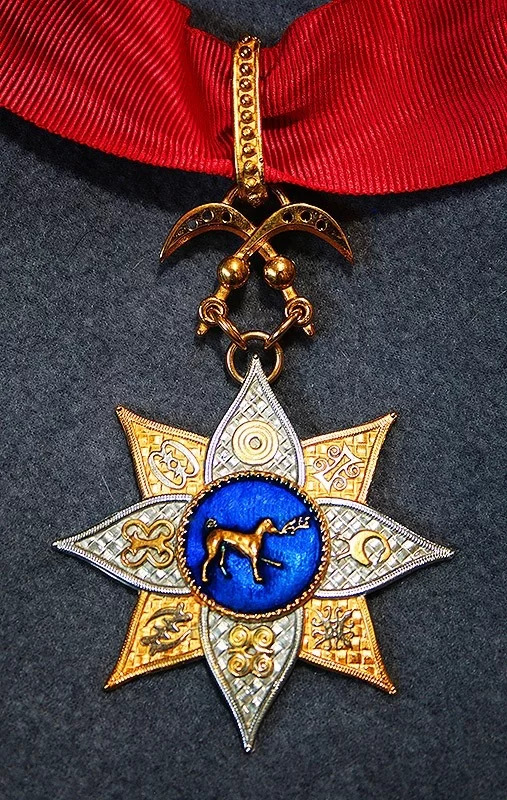
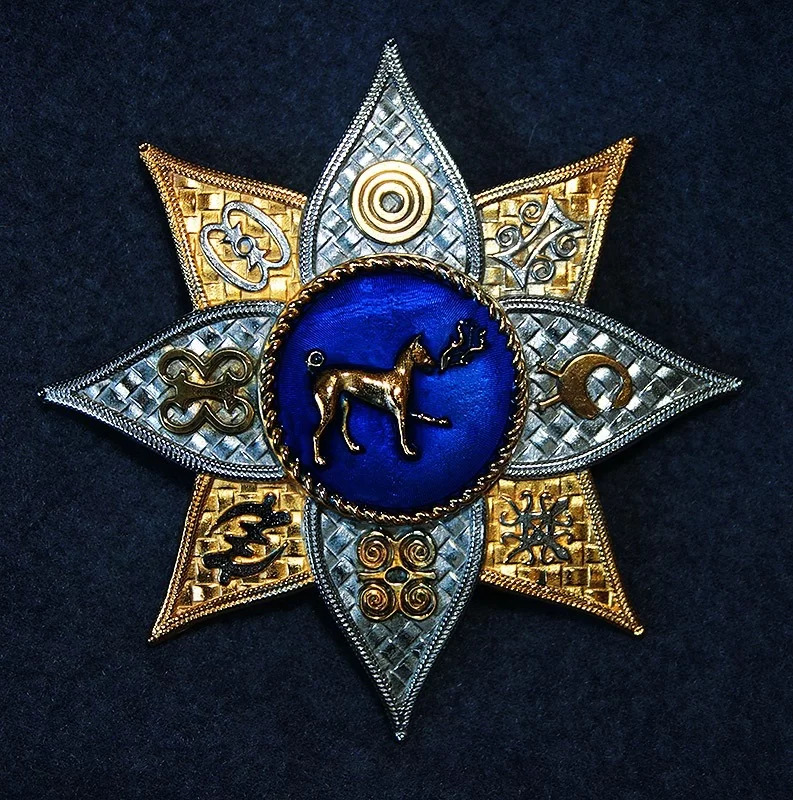
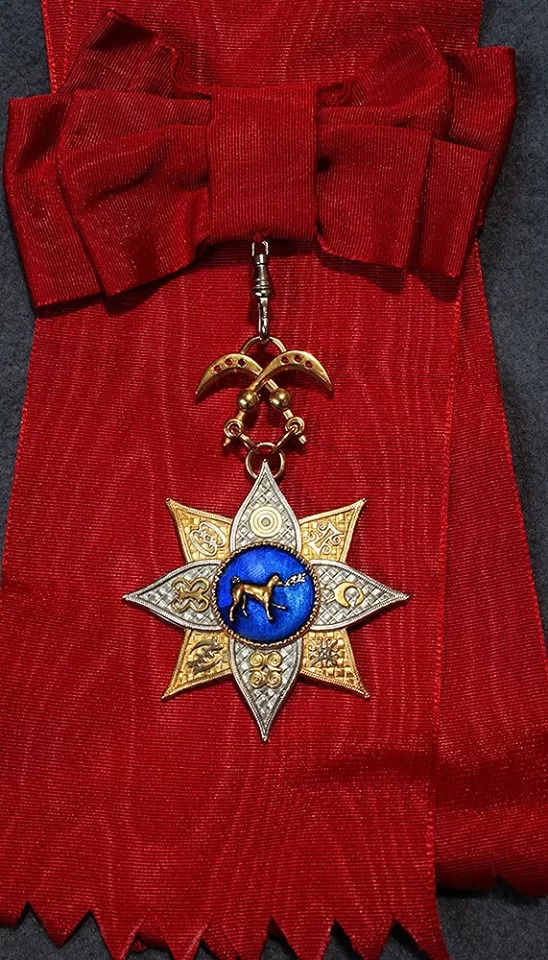
The Aduana people, from whom the Golden Fire Dog symbolism is drawn, recount that a dog bearing fire led their ancestors from the earth, earning the designation Ogyaasefuo — the fire-bearing clan. In another tradition, a dog burned its mouth retrieving fire and returned to its master, who declared, “m'atwea woabre me adie” — “my dog, you have brought me something worthy.” The fire-bearing dog thus symbolizes vigilance, sacrifice, initiative, and the bringing of worthy gifts to the community.
The Royal Order of Golden Fire Dog Asafo embodies this symbolism as an institution of disciplined service and noble responsibility.
The Guiding Principles for Akofo
A fledgling Kofo joining the Asafo indicates a wish to further the noble code of an Akan warrior. The following principles are presented here as a guide to Akofo and are based on the high noble warrior standards of old.
- Should be charitable and comfort those who are afflicted.
- Will serve faithfully and defend the rights and welfare of Sefwi Obeng-Mim, and all people around the world, courageously.
- Will forgive the follies and offense of others and sincerely embrace the love of friends.
- Will esteem truth and will never create nor participate in falsehoods.
- Needs to avoid sloth and superfluous ease. He/she will spend his/her time in the pursuit of ever virtuous action.
- Shows reverence to dignitaries and persons in authority and gives honor to those in authority.
- Will eschew riot and detest intemperance in any form, whether in his/her personal life or in the eye of the public.
- Will eschew dishonest pleasures and endeavor to do good to others.
- Will accommodate himself/herself to the humor of honest company.
- Will shun the conversation of perverse persons and behave in a modest way at all times.
- Will be sober and discreet, no boaster of his/her own acts, and not be a speaker of himself/herself.
- Will desire no excessive riches and patiently endure all worldly calamities.
- Will undertake just enterprise and defend the rights of others.
- Will support the oppressed. He/she will do everything in his/her power to provide help and succor to any who are afflicted in any way.
- Will prefer honor before worldly wealth and be just and faithful in both word and deed.
ARTICLE I Name and Standing
- The institution shall be known as the Royal Order of Golden Fire Dog Asafo (Asafo Gyadua K"k""srade).
- It constitutes a traditional Akan warrior institution expressing a non-titled ennobled standing within customary society.
- This noble standing:
- arises through service and merit;
- reflects trust and responsibility;
- remains distinct from European systems of titled nobility.
ARTICLE II Authority
The Royal Order of Golden Fire Dog Asafo derives its authority and protection from:
- Akan custom and Sefwi oral tradition;
- The Divisional Stool of Sefwi Obeng-Mim;
- The Paramount Chieftaincy of Sefwi Wiawso;
- The Regional and National Houses of Chiefs;
- Applicable rulings and administrative oversight of the Ghanaian Ministry responsible for Chieftaincy and Religious Affairs.
The Asafo shall operate in harmony with Ghanaian chieftaincy law and established customary hierarchy.
ARTICLE III Purpose
The Asafo exists to:
- Uphold communal integrity and ethical conduct;
- Support stewardship of stool lands and communal resources;
- Advance socio-economic development initiatives;
- Preserve Akan and Sefwi cultural values;
- Promote accountability and transparency in service activities.
ARTICLE IV Noble Dignities and Precedence
Section 1 — Tufohene
The Chief of Sefwi Obeng-Mim serves as Tufohene of the Royal Order and is its constitutional head. The dignity of Tufohene is inherent to the Stool and is not a rank within the Order.
Section 2 — Nature of Noble Standing
The dignities of the Order reflect the Akan understanding of a merit-based noble warrior tradition.
Such dignities:
- confer customary noble standing;
- do not create European-style aristocracy;
- do not convey sovereign authority;
- do not establish political office.
Except where expressly provided, dignities are personal and non-hereditary.
ARTICLE V Membership and Noble Character
- Members are known traditionally as Kofo.
- In Akan custom, the Kofo formed part of a merit-based ennobled warrior class, without titled aristocratic rank.
- Membership reflects:
- recognized honor;
- communal trust;
- responsibility and readiness to serve.
- Men and women may rise within the Asafo by merit and distinguished contribution.
- Membership does not create European-style peerage or sovereign authority.
ARTICLE VI Leadership
- The Asafo shall be led by an Asafohene, recognized in accordance with Akan custom and under the authority of the Divisional Chieftaincy, or Tufohene.
- The Asafohene provides stewardship, coordination, and accountability.
- The Asafohene shall be an active member of the international Asafo.
- An Asafohene shall have at least ten active members under their command.
- An Asafohene may use the customary and ceremonial style of “His/ Her Excellency.”
- An Asafohene serves at the pleasure of the Tufohene.
- No Asafohene or officer of the Asafo shall serve another Ghanian royal house. The leadership of the Asafo shall only be under the Tufohene of Sewfi Obeng-Mim and ultimately the Omanhene of Sefwi Wiawso.
ARTICLE VII Service Designations
The Asafo maintains the following service designations for recognition of responsibility:
- Kofo, Golden Fire Dog – Junior Service Member (KG)
- Kofo, Golden Fire Dog – Commander, Senior Service Member (KCG)
- Kofo, Golden Fire Dog – Grand Officer, Principal Service Member (KGOG)
- Kofo, Golden Fire Dog – Grand Cross, Eminent Service Member (KGCG)
- Kofo, Golden Fire Dog – Grand Collar, Member with Service of Distinction (GCG)
These denote levels of service responsibility only and do not confer titled nobility or sovereign dignity.
ARTICLE VIII Civic Decorations and Traditional Titles
- The Asafo may confer civic decorations and traditional Akan titles of honor in recognition of distinguished service.
- Such recognitions acknowledge customary noble standing within Akan tradition.
- Except where expressly authorized, recognitions are personal and non-hereditary.
- No honor shall be styled in a manner implying European peerage.
ARTICLE IX Interpretation
Interpretation rests with Akan custom and the authority of the Divisional Stool. Where written text conflicts with tradition, tradition shall prevail.
FINAL DECLARATION
The Royal Order of Obeng II stands as a customary Akan noble institution reflecting the historic non-titled warrior nobility of Akan society. It operates under lawful traditional authority and in harmony with Ghanaian constitutional recognition of chieftaincy.